

The Ultimate Guide to Data Resilience: 12 Powerful Strategies for Modern Businesses
Discover what Data Resilience is, why it matters, and how your business can build powerful protection against cyber threats, system failures, and unexpected disruptions.

Table of Contents
Understanding Data Resilience
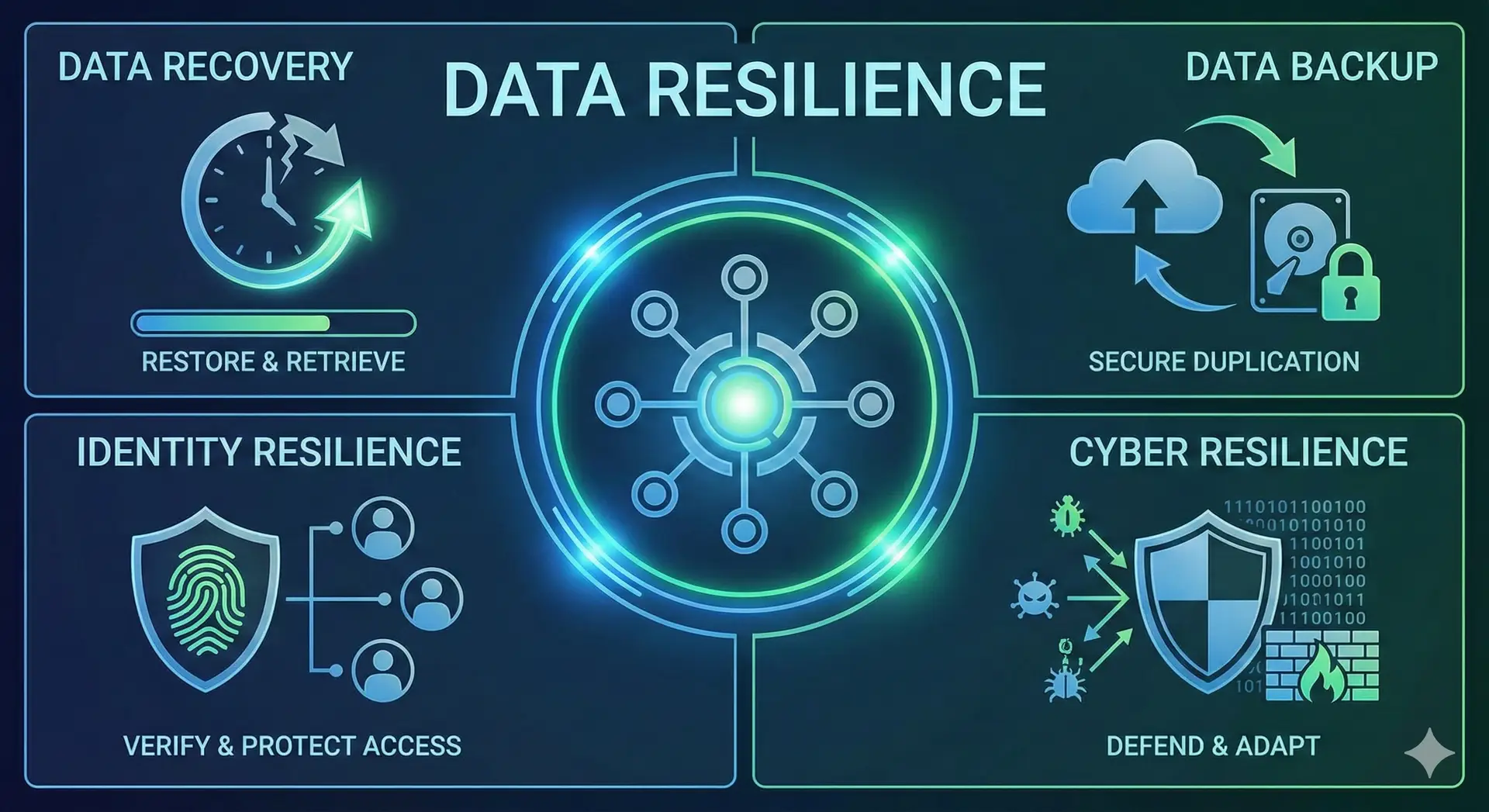
Data Resilience is becoming one of the most important priorities for organizations across the world. In today’s digital landscape, data is the backbone of nearly every business operation—from customer service and analytics to supply chain management and automation. Because of this heavy dependence, companies must ensure they can not only store data but also protect it, recover it, and keep it available even when things go wrong.
it goes far beyond traditional backup methods. While backups help restore lost data, resilience focuses on making sure your information stays accessible, secure, and usable at all times—even when unexpected disruptions occur.
What Is Data Resilience?
The term refers to an organization’s ability to prepare for, withstand, recover from, and adapt to data-related disruptions. These disruptions can come from cyberattacks, hardware failures, natural disasters, human errors, or even unexpected outages from third-party vendors.
At its core, it ensures that:
- Data is protected
- Systems can recover quickly
- Business operations continue with minimal downtime
Think of it as building a safety net that keeps your data accessible no matter what happens.
Why does it matter
Today’s threat landscape is tougher than ever. Ransomware attacks alone have skyrocketed, and businesses face downtime costs averaging tens of thousands of dollars per hour. Combine that with stricter compliance laws and increased customer expectations for always-available services, and the need becomes crystal clear.
Without proper resilience measures, businesses risk:
- Permanent data loss
- Legal penalties
- Damaged customer trust
- Long-term operational setbacks
Strong Data Resilience doesn’t just protect your data—it protects your entire organization.
Key Components of a Resilient Data Ecosystem
A solid framework typically includes:
- Redundant storage systems
- Automated backups
- Real-time replication
- Secure access controls
- Continuous monitoring and threat detection
These components work together to ensure your systems don’t collapse under pressure.
How Does It Differs From Backup & Disaster Recovery
Even though these terms are often used together, they serve different purposes. Understanding their differences helps organizations build stronger protection against data-related risks.
Backup vs. Data Resilience
Backups focus on saving copies of your data so you can restore it later. They’re essential, but they don’t guarantee your systems can operate during a disruption.
Data Resilience, on the other hand, ensures that:
- Your data stays accessible
- Your systems keep running
- Recovery is fast and smooth
In simple terms, backups are a snapshot; Data Resilience is a strategy. For specific information on the topic of backup, check out Data Backup.
Disaster Recovery vs. Data Resilience
Disaster recovery deals with returning to normal operations after a catastrophic event. Data Resilience focuses on keeping systems operational throughout the event, minimizing downtime and ensuring continuity.
If disaster recovery is the “rebuilding” phase, then Data Resilience is the “staying strong under pressure” phase.
Top Benefits of Strong Data Resilience
Building a resilient data ecosystem provides organizations with a long list of advantages.
Better Business Continuity
A strong Data Resilience strategy helps your business stay up and running, even when facing disruptions like cyberattacks or internal failures. Reduced downtime means reduced financial losses and increased customer trust.
Enhanced Cybersecurity Protection
Cyber resilience is a major part of Data Resilience. With threat detection, secure access, encryption, and real-time monitoring, organizations are better equipped to stop attacks before they escalate.
Compliance and Risk Management
Many industries—including healthcare, finance, and government—have strict regulatory requirements. It helps organizations stay compliant by maintaining data integrity, availability, and security.
Core Strategies to Achieve Data Resilience
To build a strong resilience framework, organizations must adopt a combination of technological and operational strategies.
Implementing Redundant Systems
Redundancy ensures that if one component fails, another instantly takes its place. This applies to:
- Storage drives
- Network connections
- Servers
- Power sources
Think of redundancy as having multiple “backup players” ready to jump in.
Using Cloud-Based Resilience Tools
Cloud platforms make resilience easier by offering:
- Automated backups
- Geo-redundant storage
- Managed recovery services
This removes the burden of managing everything manually on-premises.
Real-Time Data Replication
Real-time replication creates identical copies of your data across different systems or geographical locations. This ensures that even if one database goes offline, the other can take over instantly.
Automated Failover & Failback
Failover systems automatically switch operations to a healthy system when one fails. Once the issue is resolved, failback returns everything to normal.
This automation significantly reduces downtime and human error.
Zero Trust Security Models
Zero Trust ensures that no user or device is trusted by default—even if they’re inside the network. This reduces the chances of data breaches and unauthorized access.
Data Resilience in Cloud Computing
Cloud environments allow businesses to scale quickly while maintaining high levels of data availability and protection.
Multi-Cloud vs. Hybrid Cloud Resilience
- Multi-Cloud uses multiple cloud providers to avoid vendor lock-in.
- Hybrid Cloud blends on-premises systems with cloud platforms.
Both offer resilience benefits, but multi-cloud environments provide more flexibility and geographic diversity.
Cloud-Native Solutions for Data Protection
Cloud-native tools such as automated snapshots, encryption, access controls, and real-time monitoring enhance resilience with minimal manual management.
Challenges in Achieving Data Resilience
Even though the benefits are massive, implementation usually does come with hurdles.
Budget Limitations
High-quality infrastructure, redundancy, and security tools can be costly. However, downtime and data loss are far more expensive in the long run.
Skill Gaps & Workforce Training
Organizations need IT teams who understand modern security models, cloud systems, and resilience architecture. Upskilling is essential.
Legacy System Limitations
Older hardware and software often lack support for modern resilience tools. Businesses must decide whether to upgrade or modernize their systems.
Best Tools and Technologies for Data Resilience
A variety of tools exist to strengthen your data ecosystem.
Storage Solutions
- NAS & SAN systems
- Cloud-based storage
- Object storage
These offer durability and support high availability.
Cybersecurity Tools
- Firewalls
- Intrusion detection systems
- Endpoint protection
- SIEM solutions
These tools secure your data from unauthorized access and threats.
Analytics & Monitoring Platforms
Monitoring tools help identify performance gaps, anomalies, and potential failures before they cause disruptions.
Real-Life Examples in Action
Healthcare Use Case
Hospitals rely on electronic health records (EHRs) that must be available 24/7. By using real-time replication and redundant servers, healthcare facilities maintain access even during system failures.
Finance Use Case
Banks use advanced failover systems and cloud-based backups to ensure ATM networks, online banking platforms, and payment systems remain available—even during cyberattacks.
How to Build a Data Resilience Strategy (Step-by-Step)
- Assessing Current Infrastructure
Start by identifying vulnerabilities, outdated systems, and potential single points of failure.
- Defining Recovery Objectives
Set clear RPOs (Recovery Point Objectives) and RTOs (Recovery Time Objectives) to guide your strategy.
- Selecting the Right Tools
Choose cloud tools, monitoring solutions, and security platforms that align with your business size and goals.
- Continuous Testing and Monitoring
Resilience is not a one-time project. Regular testing ensures your systems stay reliable as technology evolves.
FAQs About Data Resilience
- Is Data Resilience the same as backup?
No—backups are only one part of the broader Data Resilience strategy. - Why is Data Resilience important?
It prevents data loss, reduces downtime, and supports business continuity. - Can small businesses afford Data Resilience tools?
Yes. Many cloud-based solutions are affordable and scalable. - What causes data disruptions?
Cyberattacks, hardware failures, human error, and natural disasters. - How often should organizations test their Data Resilience strategy?
At least twice a year or after major system updates. - Is cloud storage enough for Data Resilience?
No, but it’s a crucial component when combined with replication, monitoring, and strong security.
Conclusion
Data Resilience is one of the most important pillars of a modern business. With cyber threats and unexpected outages becoming more frequent, companies must ensure their data stays secure, accessible, and recoverable at all times. By focusing on redundancy, real-time replication, cloud tools, and strong cybersecurity, organizations can protect their operations and maintain customer trust.
To learn more about improving your data protection strategy, you can explore trusted resources like IBM’s Data Resilience Hub or Commvault’s platform
Leave a Reply to Healthcare Data Backup Is Not Enough: Building Full Data Resilience for NIS2 & ISO 27001 – Data Resilience HubCancel reply