


The storage and backup market has undergone a fundamental shift from “data management” to “Cyber Resilience” to “Data Resilience“. In 2025, vendors are no longer judged solely on backup speed or storage capacity, but on their ability to detect ransomware with AI, provide immutable “cleanroom” recoveries, and support massive AI workloads.
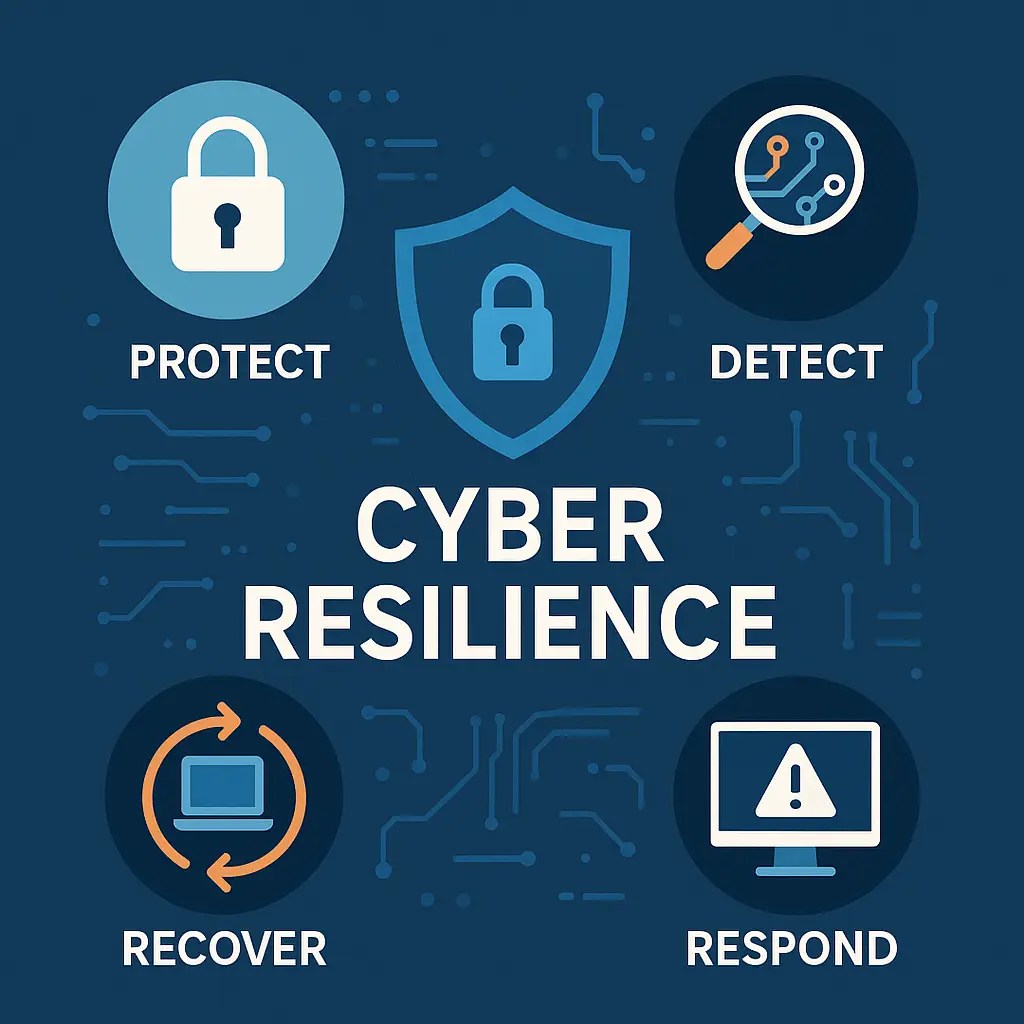
Table of Contents
Key Shifts for 2025:
- The Mega-Merger: The acquisition of Veritas by Cohesity (finalized late 2024/early 2025) has created a new titan in the industry, combining Veritas’ massive install base with Cohesity’s modern data platform.
- AI is the New Standard: Vendors like Dell and NetApp have re-engineered their storage specifically for “AI Factories” (hosting data for AI model training). Meanwhile, backup vendors use “Agentic AI” to automatically hunt for threats within backups.
- SaaS & Cloud-Native Dominance: Druva and Rubrik have surged in popularity as organizations move away from managing physical backup servers, preferring 100% cloud-native SaaS models.
Most Popular Vendors (2025 Edition)
Here is the updated list of market leaders for 2025, reflecting the current focus on AI, security, and hybrid cloud.
1. Cohesity + Veritas (The New Powerhouse)
- Status: Merged Entity (Acquisition completed ~Dec 2024)
- Specialization: The largest combined data security and management portfolio in the market.
- 2025 Focus: “No Customer Left Behind” strategy. Combining Veritas’ massive scale with Cohesity’s modern, AI-driven insights.
- Popular Products: Cohesity Data Cloud, Veritas NetBackup, Veritas Alta, and the unified Cohesity Gaia (AI search assistant).
2. Veeam
- Status: Market Leader in Cyber Resilience
- Specialization: Ransomware recovery and platform-agnostic data freedom.
- 2025 Focus: The release of Veeam Data Platform v13 brings “Zero Trust Data Resilience” and a new Malware Analysis AI Agent that scans backups for latent threats before restoration.
- Popular Products: Veeam Data Platform Premium, Veeam Recovery Orchestrator, Kasten K10 (for Kubernetes).
3. Dell Technologies
- Status: Leader in AI Infrastructure & Storage
- Specialization: End-to-end infrastructure from “Edge to Core to Cloud.”
- 2025 Focus: The Dell AI Factory. Dell has aggressively pivoted its PowerScale storage (Project Lightning) to feed data into NVIDIA GPUs faster than any competitor.
- Popular Products: Dell PowerScale (AI Storage), Dell PowerStore (Prime), Dell PowerProtect Cyber Recovery (Vault).
4. Rubrik
- Status: Leader in Zero Trust Data Security
- Specialization: Cyber recovery and immutable backups that assume the network is already breached.
- 2025 Focus: Heavy emphasis on Rubrik Security Cloud and their AI assistant “Ruby”, which helps IT teams identify exactly which data was compromised during a cyberattack.
- Popular Products: Rubrik Security Cloud, Rubrik CDM, Rubrik Vault.
5. NetApp
- Status: Leader in Hybrid Cloud & AI Data
- Specialization: The most mature cloud-integrated storage OS (ONTAP) on the market.
- 2025 Focus: Intelligent Data Infrastructure. They introduced the AFX AI Portfolio and AIDE (AI Data Engine) to make data “AI-ready” regardless of whether it lives on-prem or in AWS/Azure.
- Popular Products: NetApp AFF (C-Series & A-Series), Azure NetApp Files, Amazon FSx for NetApp ONTAP.
6. Pure Storage
- Status: Leader in All-Flash Efficiency
- Specialization: High-performance all-flash storage that consumes minimal power and space.
- 2025 Focus: Sustainability and the “Evergreen” promise (never needing a “forklift” upgrade). Their FlashBlade//S is a top choice for rapid restore and AI workloads.
- Popular Products: FlashArray//X & //C, FlashBlade, Portworx (Container Storage).
7. HPE (Hewlett Packard Enterprise)
- Status: Leader in Edge-to-Cloud
- Specialization: Consuming storage as a service rather than buying hardware.
- 2025 Focus: HPE GreenLake. Their new Alletra Storage MP allows customers to run block and file storage on the same hardware, managed 100% from the cloud.
- Popular Products: HPE GreenLake for Block Storage, HPE Alletra MP, Zerto (for continuous disaster recovery).
8. Druva
- Status: Leader in SaaS Data Protection (Rising Star)
- Specialization: 100% Cloud-native backup (no hardware to manage).
- 2025 Focus: Securing distributed data (endpoints, Microsoft 365, AWS). Druva has seen massive growth as companies ditch physical backup servers for its Data Security Cloud.
- Popular Products: Druva Data Resiliency Cloud.
9. IBM
- Status: Enterprise Legacy & Innovation
- Specialization: Mainframe storage and massive scale cyber-resilience.
- 2025 Focus: IBM Storage Defender. Integrating their storage specifically with security tools to create a “Cyber Vault” that is virtually impenetrable.
- Popular Products: IBM Storage FlashSystem, IBM Storage Defender, IBM Spectrum Scale.
10. Commvault
- Status: Enterprise Recovery & Compliance
- Specialization: Protecting complex, hybrid environments with deep compliance needs.
- 2025 Focus: Commvault Cloud (Metallic). They have successfully transitioned to a “Cyber Resilience Platform” powered by their AI engine, Metallic AI, to predict threats.
- Popular Products: Commvault Cloud, HyperScale X.
11. Hyperscale Cloud Providers (Microsoft & AWS)
- Status: Default choice for Cloud-Native Data
- Specialization: Seamless, integrated backup for resources already in the cloud.
- 2025 Focus: Both have moved beyond simple snapshots. AWS Backup and Azure Backup now offer “Vaults” with immutability and compliance locks to compete with traditional vendors.
- Popular Products: AWS Backup (Vault Lock), Azure Backup (Soft Delete & Multi-User Authorization).
FAQs About Cyber Resilience, a market analysis
Below are expanded and updated FAQs that integrate the new 2025 storage, backup, and cyber resilience market insights.
1. Why has the storage and backup market shifted toward cyber resilience in 2025?
Because traditional backup alone can’t defend against modern ransomware. Attackers now target backup systems directly, corrupt metadata, poison snapshots, and wait inside environments before striking. In 2025, vendors must provide AI-driven threat detection, immutable storage, cleanroom recovery, and zero-trust architectures, which are core elements of cyber resilience.
2. How does the Cohesity + Veritas merger impact the cyber resilience market?
The merger formed the largest combined data security and management company in the world. Veritas contributes scale and enterprise depth, while Cohesity adds modernization, SaaS readiness, AI intelligence, and cloud-native flexibility. This consolidation shifts buying power and reshapes procurement strategies for enterprises worldwide.
3. What role does AI play in cyber resilience in 2025?
AI is now embedded everywhere—from scanning backups for hidden malware to powering “Agentic AI” bots that proactively hunt threats, map blast radius, and provide recovery recommendations. AI also transforms storage, enabling high-throughput architectures for AI Factories, GPU clusters, and large-scale data pipelines.
4. Which vendors lead in zero-trust data protection in 2025?
Rubrik, Veeam, Cohesity+Veritas, and Commvault are top performers. Rubrik’s model assumes the environment is already compromised, while Veeam’s new Data Platform v13 integrates Zero Trust Data Resilience with AI-driven malware detection. Commvault applies predictive AI (Metallic AI), and Cohesity brings a unified AI-driven data cloud.
5. Why are cloud-native vendors growing faster than appliance-based vendors?
Cloud-native platforms like Druva and Rubrik Security Cloud eliminate hardware, reduce operational overhead, and enable instant scalability. In the age of ransomware and AI workloads, organizations want low maintenance, highly automated, elastic solutions—something hardware cannot match.
6. What is “cleanroom recovery” and why is it essential?
Cleanroom recovery is an isolated, immutable environment used to recover systems safely after a cyberattack. It ensures:
- Malware can’t re-infect the environment
- Data integrity is verified
- AI tools scan for hidden threats
- Recovery is validated before going live
Vendors like Dell, Rubrik, Veeam, and Cohesity now offer secure recovery vaults based on this model.
Conclusion: The Strategic Value of Cyber Resilience in 2025 and Beyond
Cyber Resilience, a market analysis shows that 2025 marks a critical turning point in how organizations protect and manage their data. What began as a traditional backup and storage market has evolved into a full-spectrum cyber resilience ecosystem, shaped by AI, zero-trust architectures, cloud-native protection, and massive data growth from AI workloads.
The Cohesity + Veritas merger emerged as a defining moment, consolidating industry strength and forcing competitors to accelerate innovation. Meanwhile, Veeam, Dell, Rubrik, NetApp, Pure Storage, and Druva have pushed the boundaries of what resilience means—from AI-based defense to cleanroom recoveries, cyber vaults, and intelligent data pipelines.
As cyber threats grow more aggressive and data volumes multiply, resilience is no longer optional—it’s a strategic advantage. Companies that prioritize:
- Immutable infrastructure
- AI-driven threat detection
- Cloud-native data protection
- Zero-trust recovery models
- Automated response workflows
will be the ones that thrive, rebuild quickly, and maintain customer trust in a world where downtime is unacceptable.
Cyber resilience isn’t just the future of cybersecurity—it’s the future of business continuity, risk management, AI infrastructure, and digital trust.
Leave a Reply